Campus scope
Multi-building
Federated security across distributed facilities.

Higher education is a secondary market for Confluence Security, but the operating problem is familiar. A campus has many buildings, many schedules, many user groups and many incident types. The security platform has to support daily operations and emergency response without creating a different workflow for every building.
The strongest campus designs federate buildings under one platform while still allowing local rules. A residence hall, research building, stadium and parking structure do not need identical access schedules. They do need common visibility, common audit trails and a common incident review path.
Campus scope
Multi-building
Federated security across distributed facilities.
Operations
One center
Camera, access, parking and events in one view.
After hours
Scheduled access
Credential rules match building use.
Reporting
Clery support
Video and access logs help document incidents.
Campus systems often grow building by building. That can leave safety teams with separate servers, separate logins and inconsistent rules. Federation brings those buildings into a common operating view while allowing each facility to keep the schedules and permissions it needs.
That matters during normal operations and incidents. Dispatch can see the building, door, camera and nearby emergency station without asking which system owns the record. Administrators can review trends without exporting spreadsheets from every building.
Emergency call stations still have a role when they are maintained, mapped and connected to response workflows. A call point should show the location, open nearby camera views and create a reviewable event. If a station only rings a desk with no context, it is underperforming.
Campuses should review station placement, lighting, signage, accessibility, cellular coverage and camera coverage together. A call station is strongest when the responder can see the approach path and surrounding area.
Residence halls need more than a locked exterior door. They need after-hours credential schedules, staff access, contractor access, visitor processes, door-held monitoring and camera views for entries, lobbies, elevators and exterior approaches.
Access schedules should match student life. Move-in, holidays, summer programs, athletics and events all change who should enter which spaces. The platform should let campus safety adjust rules without weakening audit trails.
Campus parking creates security, enforcement and operations problems. License plate recognition can help identify vehicles tied to alerts, investigate incidents, support permit enforcement and understand movement between lots.
The important part is policy. Campuses need clear retention, access and use rules. The technology should support those rules with role-based access and audit logs.
Large events change the risk profile of a campus. Stadiums, arenas, graduation venues and public lectures bring visitors who are not part of the daily campus population. Cameras, access points, temporary command locations and communication plans need to match that temporary operating mode.
Panoramic views help with crowd context, while targeted cameras support entrances, cash handling, restricted doors, loading zones and command posts. Event coverage should be planned before the event calendar reaches capacity.
Video and access logs do not replace Clery Act reporting work, but they can support it. Clean timelines, incident locations, access records and preserved clips help campus safety document what happened and where it happened.
The system should make it easy to preserve records, restrict access, export evidence and show who reviewed the material. That helps campus safety, student affairs, law enforcement and counsel work from the same facts.
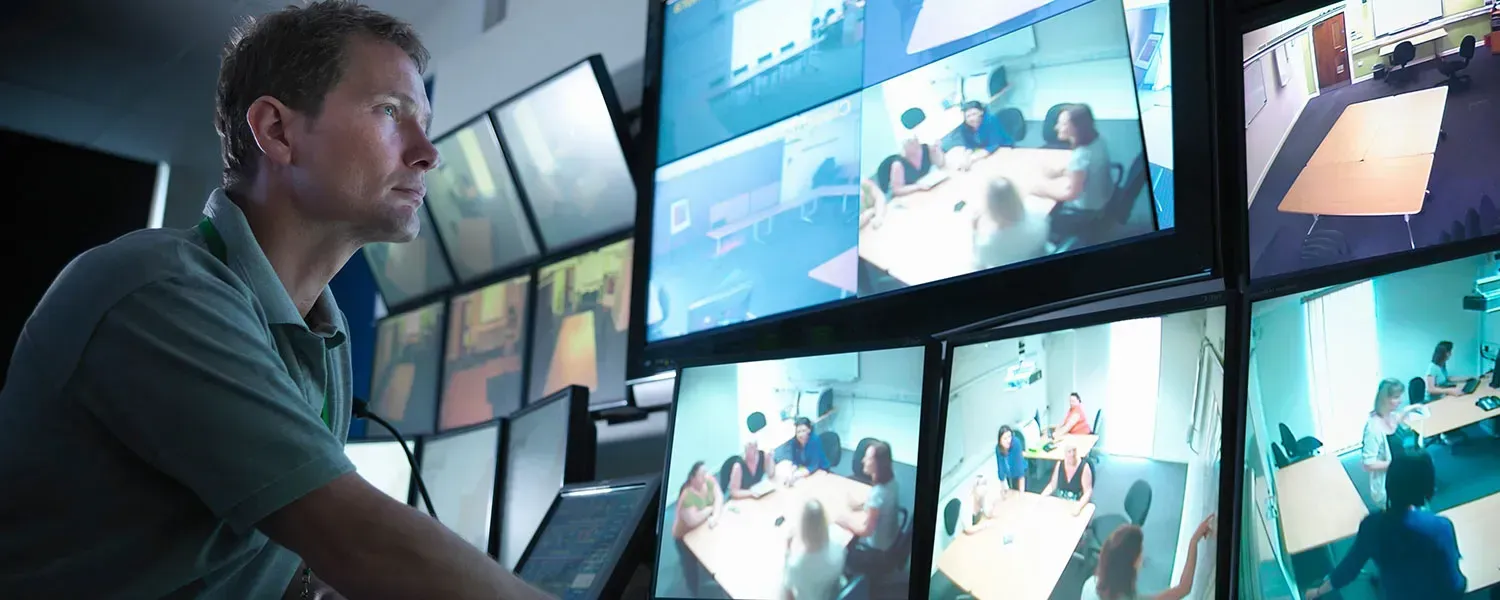
A campus operations center is most useful when it avoids system hopping. Operators should be able to see alarms, live video, access events, parking events and emergency call stations in one view. They should also be able to hand off incidents cleanly for investigation and reporting.
The center does not have to be large to be effective. It needs the right workflows, clear permissions, good displays, documented procedures and reliable support.
Use a federated platform that brings cameras, access control, parking events and emergency stations into one operating view while allowing each building to keep its own schedules and permissions.
Video does not replace Clery compliance work, but it can support accurate incident review, location confirmation, preservation and documentation when handled under campus policy and counsel guidance.
Continue through the school security cluster and related campus planning pages.
A modern K-12 security system is one unified platform covering cameras, door access, visitor management and emergency notification, so an administrator sees the whole campus in one interface instead of four disconnected systems. Confluence Security designs, installs and supports those systems for districts across Colorado and Wyoming.
Explore K-12 schoolsA school district camera system should be designed by zone, not by camera count. Entrances, corridors, commons, parking areas, buses and exterior approaches each need the right field of view, resolution, retention and network design so staff can identify what happened without putting unsupported devices on the student network.
Explore School camerasSchool access control should control how people enter, move and respond without trapping anyone inside. The strongest designs combine a single point of entry, visitor screening, secure credential technology, code-compliant door hardware and camera events that open the right video the moment a door alarm occurs.
Explore Access and visitorsAsk Confluence Security to review how your buildings, parking, event venues and emergency stations can work from one campus view.
Kindly provide your contact info and a team member will get in touch shortly.