Buildings
Healthcare Facility Security Systems in Colorado: Cameras, Access Control and Workplace Violence Prevention
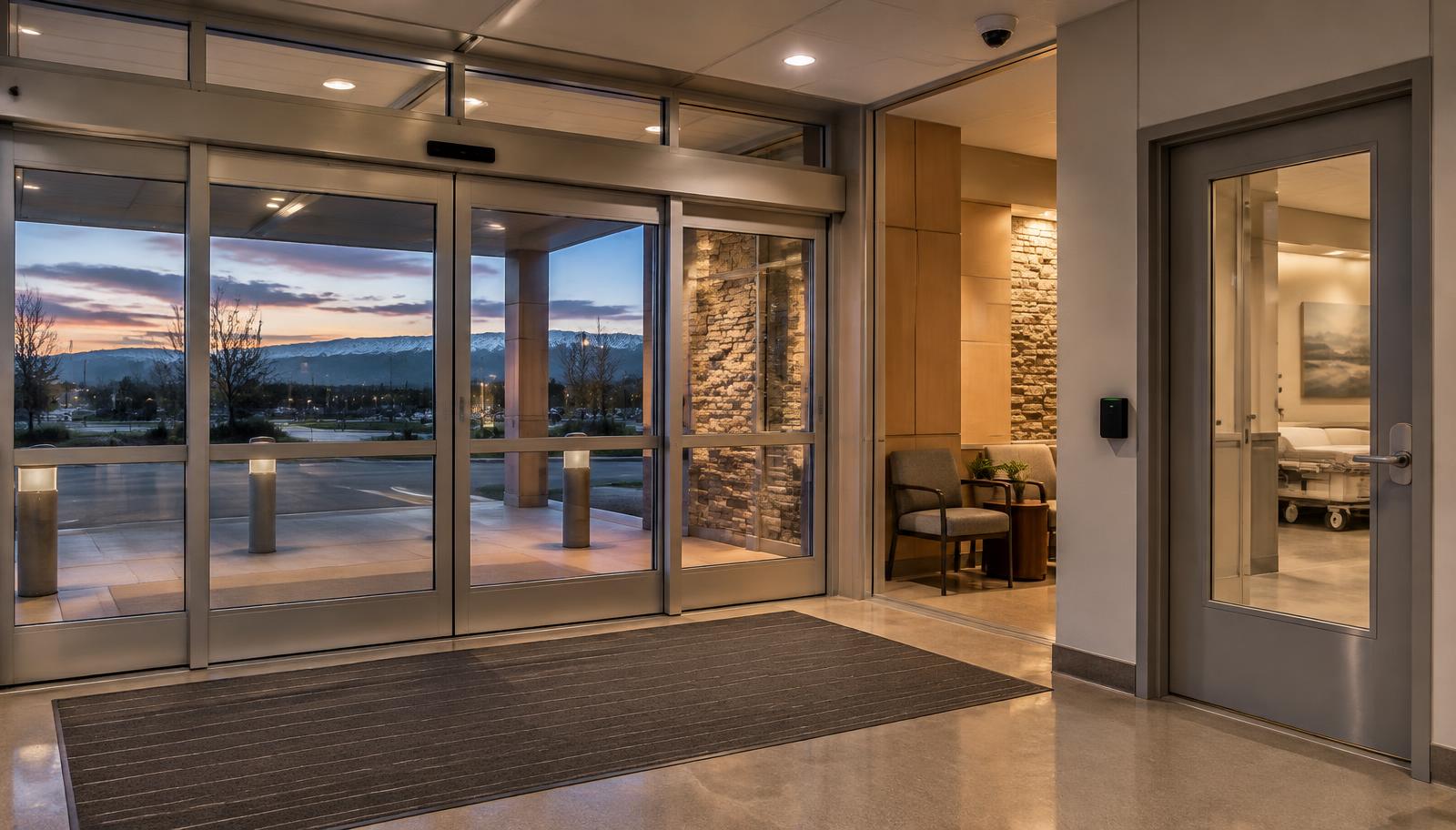
Healthcare facility security systems in Colorado combine cameras, access control, visitor management, duress alerting and coordinated monitoring to protect staff and critical spaces. The design must also respect patient privacy. A strong program starts with a documented risk assessment, then applies the right control to each clinical and operational zone.
Confluence Security's healthcare facility security services connect physical security with workplace violence prevention, privacy review and daily clinical operations. Joint Commission and OSHA workplace violence guidance provide useful planning context, but each organization should interpret its obligations with its own compliance and legal teams.
Which healthcare zones need different security controls?
Healthcare security should treat each zone according to its clinical purpose, hours, public access and likely incident path. An emergency department entrance has different risks from a pharmacy or loading dock. One camera standard applied everywhere creates privacy conflicts in some areas and leaves critical transitions underprotected in others.
- Emergency departments need clear entrance, waiting area transition and staff-only door coverage, plus a rapid duress response path.
- Behavioral health areas require careful privacy review, durable equipment placement and coordination with clinical leaders.
- Pharmacies and medication rooms need controlled access, event records and views focused on doors and transactions rather than patient care.
- Infant and pediatric units need layered access, visitor controls and alerts tied to established clinical procedures.
- Parking structures need lighting, vehicle and pedestrian coverage, help points and safe routes to staffed entrances.
- Loading docks need delivery verification, controlled doors and coverage of receiving activity and after-hours access.
A zone plan should show public, controlled and highly restricted transitions. That map becomes the basis for the building security system, camera views, reader locations, visitor process and response assignments. It also helps facilities teams phase work without losing sight of the final operating model.
How should access control and visitor management work together?
Access control defines who may enter a staff or clinical area, while visitor management documents why a guest is present and who approved the visit. The two systems should share an operating policy, not necessarily every data field. Security staff need a clear exception process for emergencies, vendors and after-hours arrivals.
Badge permissions should follow job responsibilities and expire when assignments change. Pharmacy, medication, infant care and infrastructure areas need tighter approval than general offices. Visitor credentials should be time limited, visually distinct and linked to a host or destination. Door alarms should reach the team responsible for acting on them.
How do duress buttons and staff alerts support workplace violence prevention?
Duress buttons give staff a discreet way to request help when speaking or reaching a phone could worsen an incident. A useful alert identifies the location, reaches an assigned responder and can present nearby camera views for verification. The technology only works when training and response responsibilities are clear.
Fixed controls may fit reception, pharmacy and nursing stations. Wearable controls can support staff who move between rooms or parking areas. Every device needs regular testing and a documented escalation path. Joint Commission and OSHA workplace violence guidance can inform planning, while the facility's legal and compliance teams should approve the final program.
Where can healthcare cameras be placed without compromising privacy?
Healthcare cameras should focus on entrances, corridors, controlled doors, transaction points and exterior risk areas, not spaces where patients reasonably expect privacy. Camera placement needs review by privacy, compliance and clinical officers. The facility should document the purpose of each view before installation and restrict access after commissioning.
HIPAA can apply when video contains patient information or becomes part of a regulated workflow. That general principle does not replace legal advice. Facilities should review recording, audio, remote access, disclosure and evidence sharing with counsel. The design should use masking, limited fields of view and role-based access where those controls reduce unnecessary exposure.
How should healthcare organizations set video retention?
Healthcare video retention should be set by written policy, not a generic storage default. The policy should consider incident reporting, claims, legal holds, privacy duties and operational review. Flagged material needs protection from routine overwrite, while ordinary recordings should expire consistently according to the approved schedule.
The policy should name who can preserve a clip, approve an export and share evidence outside the organization. Audit history matters because it shows who accessed the material and when. Our commercial camera cost guide explains how retention affects system design and budget without substituting a number for policy.
How do a VMS and security operations center improve response?
A video management system and security operations center bring camera, door, duress and intercom events into a coordinated response view. Operators can verify an alert, follow movement and direct responders without switching between disconnected systems. The platform should preserve role-based access and a reliable audit trail across all facilities.
A security operations center can serve one campus or support multiple sites with local response teams. Open integration matters when facilities already have mixed camera generations. The camera standards transition guide explains why device support and firmware condition should be audited before an expansion.
How should a healthcare security rollout be phased?
A phased healthcare rollout should address the highest consequence gaps first, establish a common technical standard and preserve supported equipment where practical. Each phase needs a complete response workflow. Installing cameras without access, alert and evidence procedures creates partial coverage that looks finished but does not operate as a unified program.
Healthcare security assessment checklist
- Map emergency, behavioral health, pharmacy, infant care, parking and receiving zones with clinical and security leaders.
- Document public, controlled and highly restricted doors, including after-hours exceptions.
- Review every proposed camera view with privacy, compliance and clinical officers.
- Test duress alerts from the point of activation through acknowledgement and responder arrival procedures.
- Inventory existing cameras, access panels, intercoms and network capacity before specifying replacements.
- Set retention, evidence preservation and external sharing rules in writing.
- Prioritize phases by consequence, response gap and operational disruption rather than equipment age alone.
- Define acceptance tests and staff training before each phase enters service.
Confluence Security is based in Aurora and serves Colorado, Wyoming, Utah and New Mexico. Regulated operators can compare these controls with our Colorado cannabis facility security requirements guide. Colorado organizations can also review our statewide service coverage. To plan a privacy-aware assessment, call 303 596 7819 and start with our healthcare facility security services.
Frequently asked questions
- What systems belong in a Colorado healthcare security program?
- A complete program can include privacy-aware video, access control, visitor management, staff duress alerts, intercoms and coordinated monitoring. The design should follow a documented risk assessment and the facility's clinical, privacy, compliance and emergency procedures.
- Where should hospitals avoid placing cameras?
- Healthcare facilities should avoid cameras where patients reasonably expect privacy. Camera maps should be reviewed with privacy, compliance and clinical leaders. Counsel should advise on recording, access and disclosure when video may contain patient information.
- How should healthcare video retention be set?
- Retention should follow written policy based on incident reporting, claims, legal holds, privacy duties and operational needs. Flagged evidence should be protected from routine overwrite and every export or share should be logged through a controlled workflow.
- How do duress buttons support healthcare workers?
- A fixed or wearable duress control can silently notify security and identify the location of a staff member who needs help. The alert should connect to an assigned response procedure and, where appropriate, nearby camera views for rapid verification.
- Can an existing hospital camera system be upgraded in phases?
- Yes. A phased rollout can preserve supported cameras, correct the highest-risk gaps first and move sites toward a common video management standard. The assessment should identify unsupported devices, privacy conflicts, access gaps and integration limits before procurement.
- Where does Confluence Security serve healthcare facilities?
- Confluence Security is based in Aurora and serves healthcare organizations across Colorado, Wyoming, Utah and New Mexico. The team can assess a single facility or develop standards for a regional group of sites.