Funding
Is School Bus Wi-Fi Still E-Rate Eligible in 2026?
No. School bus Wi-Fi is no longer E-Rate eligible. The FCC rescinded the authorization that made it eligible, and E-Rate support is now limited to services provided on school and library premises. If you are building a fiscal 2026 or 2027 transportation budget around E-Rate reimbursement for bus connectivity, that line item does not exist anymore.
We are writing this because almost every page currently ranking for this question was written in 2023 or 2024, when the answer was yes. Districts are making real budget decisions off pages that were correct when published and are wrong now. Here is the timeline, the practical consequence, and what to do with the hardware.
The timeline, in order
- October 2023: an FCC declaratory ruling made Wi-Fi on school buses eligible as an educational purpose under E-Rate.
- July 2024: a further order extended E-Rate to off-premises Wi-Fi hotspots and hotspot service.
- Fiscal year 2024: roughly 48 million dollars was committed through E-Rate for school bus Wi-Fi.
- The authorization was challenged in federal court on statutory authority grounds.
- September 30, 2025: the FCC voted two to one to end eligibility for school bus Wi-Fi and off-campus hotspots.
- October 20, 2025: the FCC released an Order on Reconsideration and Declaratory Ruling rescinding the prior authorization, reasoning that it exceeded the agency's statutory authority under Section 254 of the Communications Act.
- Shortly after, the challengers moved to dismiss their own case as moot. They had won by other means.
What happens to money already committed
Commitments already granted for fiscal year 2024 were not clawed back. That is the good news and it is narrow. E-Rate commits funding one year at a time. A district that signed a three-year connectivity agreement in fiscal 2024 has funding for fiscal 2024 and nothing after it. The contract term does not create a funding term.
USAC was directed to deny pending funding requests beginning with fiscal year 2025. More than 8,000 entities with requests covering roughly 200,000 off-campus hotspots were affected. Districts that already paid a service bill for the current school year expecting reimbursement need another funding stream for it.
The filtering question
Content filtering on bus Wi-Fi was a condition of E-Rate funding under the Children's Internet Protection Act. Remove the funding and that specific obligation no longer attaches. This is a legal technicality, not permission to stop filtering. Districts still filter district-issued devices and district-provided connections under their own internet safety and acceptable use policies, and a board that quietly dropped filtering on a bus network because a funding condition lapsed would have a difficult meeting ahead of it. Keep filtering.
The subsidy is gone. The router is not.
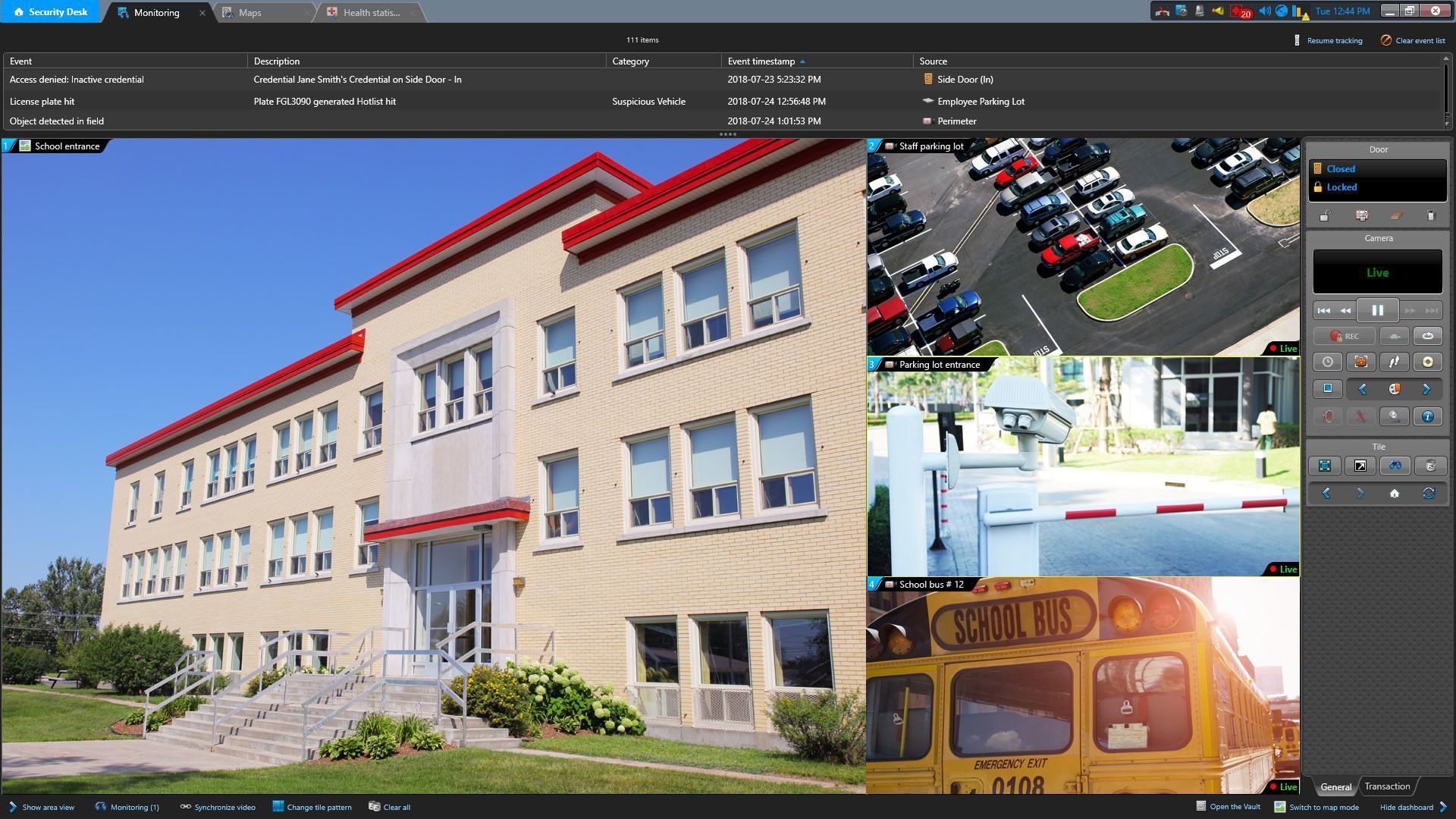
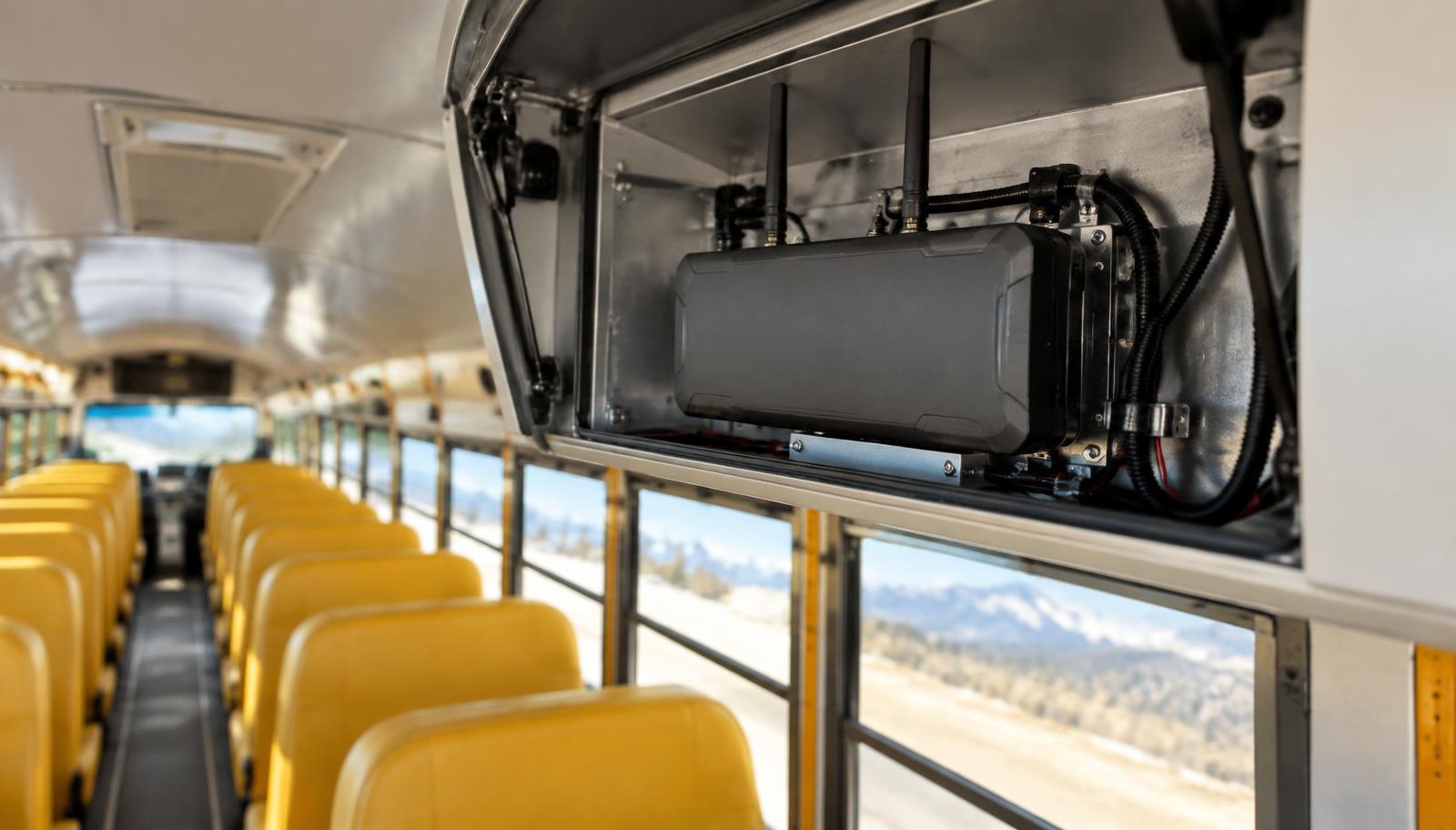
This is the part that matters operationally. The cellular router on a bus was never only a Wi-Fi access point. It is the uplink for the entire onboard security stack, and every one of those functions survives the funding change:
- Video offload from the onboard recorder to district storage when the bus reaches the yard or over cellular for flagged clips.
- Live look-in during an active incident, so a dispatcher or responding officer sees the bus interior rather than hearing a description of it.
- GPS and telematics: route adherence, speed, harsh braking, arrival timing and parent-facing bus location.
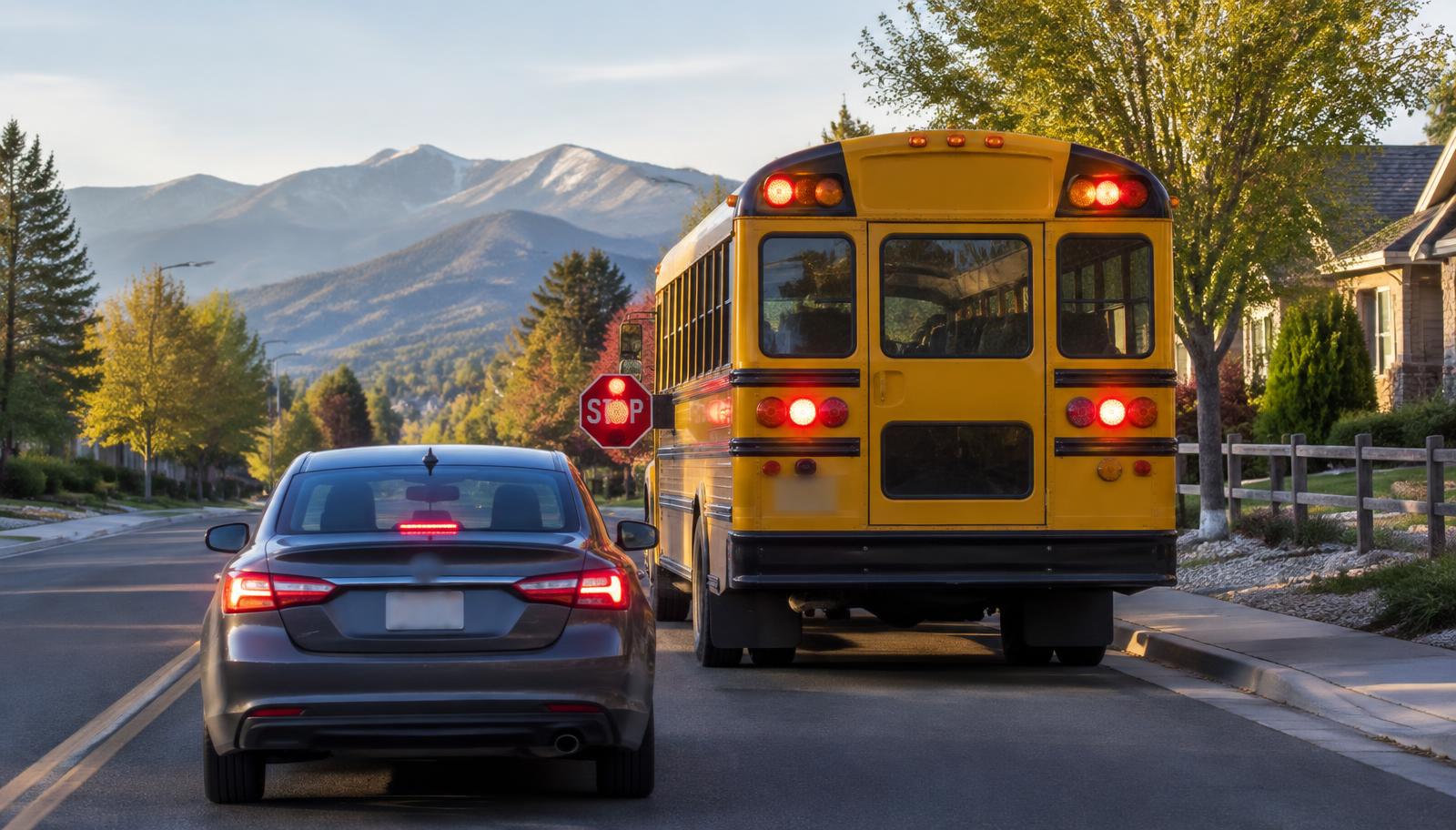
- Stop-arm violation evidence upload, which is worthless if the clip sits on a hard drive until someone pulls the bus out of service.
- Driver panic alerting and two-way notification, supported by transit bus security cameras for operator assault prevention.
So the funding argument changes rather than disappears. Instead of a federal telecommunications subsidy for student internet access, this becomes transportation or general fund spending on safety and evidence infrastructure, justified on liability, incident response time and evidence quality. In our experience that is an easier case to make to a board than instructional internet on a 40 minute ride, because the outcome is concrete and the exposure it reduces is measurable.
If your district bought routers for E-Rate funded Wi-Fi and they are now sitting on buses doing nothing useful, we will assess whether those exact units can be repurposed into the video and telematics stack. Sometimes they can, sometimes the cellular modem generation or the mounting and power situation makes replacement the honest answer. We will tell you which one you are looking at before anyone writes a purchase order.
What to do this quarter
- Pull every connectivity agreement signed in fiscal 2024 and find the funding assumption written into it.
- Identify which service bills for the current school year assumed reimbursement that is not coming.
- Inventory the installed routers by model year and cellular capability, and confirm which are still supported.
- Rebuild the ask as a safety and evidence line item in the transportation or general fund, not a technology line item.
- Confirm current E-Rate status with your E-Rate consultant or USAC before you finalize anything.
That last point is not a disclaimer for its own sake. Funding rules in this program have changed twice in three years, and a federal ruling can be revisited. Treat this post as accurate for planning as of publication, and verify status with your consultant or USAC before the filing window.
Where to go next
For the technical picture on routers, filtering and onboard networking, see our school bus connectivity and Wi-Fi page. For the full onboard security stack, start at the school bus security pillar. For the funding streams that are still available to Colorado and Wyoming districts, see school security grants and funding. If you want us to look at the routers you already own, call 303 596 7819 or use the contact form and we will schedule an assessment.
Frequently asked questions
- Can a district still use E-Rate for school bus Wi-Fi in 2026?
- No. The FCC rescinded the prior authorization and limited E-Rate support to services provided on school and library premises. Funding requests for bus Wi-Fi and off-campus hotspots are denied beginning with fiscal year 2025.
- Do districts have to give back money already committed?
- Commitments already granted for fiscal year 2024 were not retroactively denied. But E-Rate commits funding year by year, so a multi-year agreement signed in fiscal 2024 is not funded past fiscal 2024.
- Does CIPA filtering still apply to bus Wi-Fi?
- Filtering was a condition of E-Rate funding. With the funding gone, that condition no longer attaches. Most districts still filter district-issued devices under their own internet safety policy, and we recommend they keep doing it.
- Can existing bus routers be reused?
- Often yes. Many cellular routers bought for student Wi-Fi can carry video offload, telematics and alerting instead. We assess the installed units before anyone buys replacements.